The best soap for diabetics is the one your skin hardly notices. Look for a fragrance-free, pH-balanced cleanser with added moisture and nothing antibacterial or deodorizing in it. Wash in warm water, pat dry, and moisturize right away.
Simple enough on paper. Living with it is harder, because the wrong bar can quietly undo every lotion and every turned-down shower you've tried. Most people start with the lotion. We think you should start with the cleanser. Finding the best soap for diabetics is the first step toward protecting skin from dryness and irritation.
TL;DR Quick Answers
Best Soap for Diabetics
The best soap for diabetics is fragrance-free, pH-balanced, and moisturizing, with nothing antibacterial or deodorizing in it. For the body, pick a syndet bar. For hands that get washed all day, a rinse-free hand soap skips the wet wash that keeps drying skin out.
Look for: "Fragrance-free" (not just "unscented"), "syndet" or "pH-balanced," and glycerin, ceramides, or plant oils.
Skip: Synthetic fragrance, antibacterial and deodorant soaps, triclosan, SLS, and alcohol.
Bar or liquid: The formula matters more than the format. A syndet bar usually beats a traditional soap bar.
For frequent handwashing: A doctor-made, rinse-free, 100% plant-based option like NOWATA™ cuts the soap-and-rinse cycles that crack knuckles.
After you wash: Pat dry and put on a cream right away, but not between your toes.
Call your doctor: If a crack or sore hasn't started healing within a few days.
Top Takeaways
Diabetes can cut down on sweating and slow healing, so your dry skin cracks faster and takes longer to recover.
The best soap for diabetics is fragrance-free, pH-balanced, and moisturizing, with nothing antibacterial or deodorizing in it.
Syndet bars usually treat sensitive skin better than traditional soap bars because they sit closer to your skin's natural pH.
Your hands take the most washes, so a gentle or rinse-free hand soap can make a noticeable difference.
Warm water, gentle patting, and a cream right after washing protect your skin as much as the soap does.
Why Diabetic Skin Reacts Differently to Soap
High blood sugar can damage the nerves that switch on your sweat glands. Less sweat means less built-in moisture. So your skin dries fast, tightens, and splits.
Diabetes also slows healing and raises your odds of infection. A split knuckle that a friend forgets about in two days can hang around on your hand for two weeks, and it deserves more of your attention. Wikipedia keeps a running list of the skin conditions linked to diabetes, from fungal infections to slow-healing foot sores.
Soap sits right in the middle of all this. Every wash pulls away some of the oil your skin barrier relies on, and a harsh cleanser pulls away more every single time you use it.
What Makes the Best Soap for Diabetics
The American Diabetes Association keeps its advice short: mild soap, no very hot water, and moisturizer after bathing. On a label, "mild" looks like this.
What to Look For
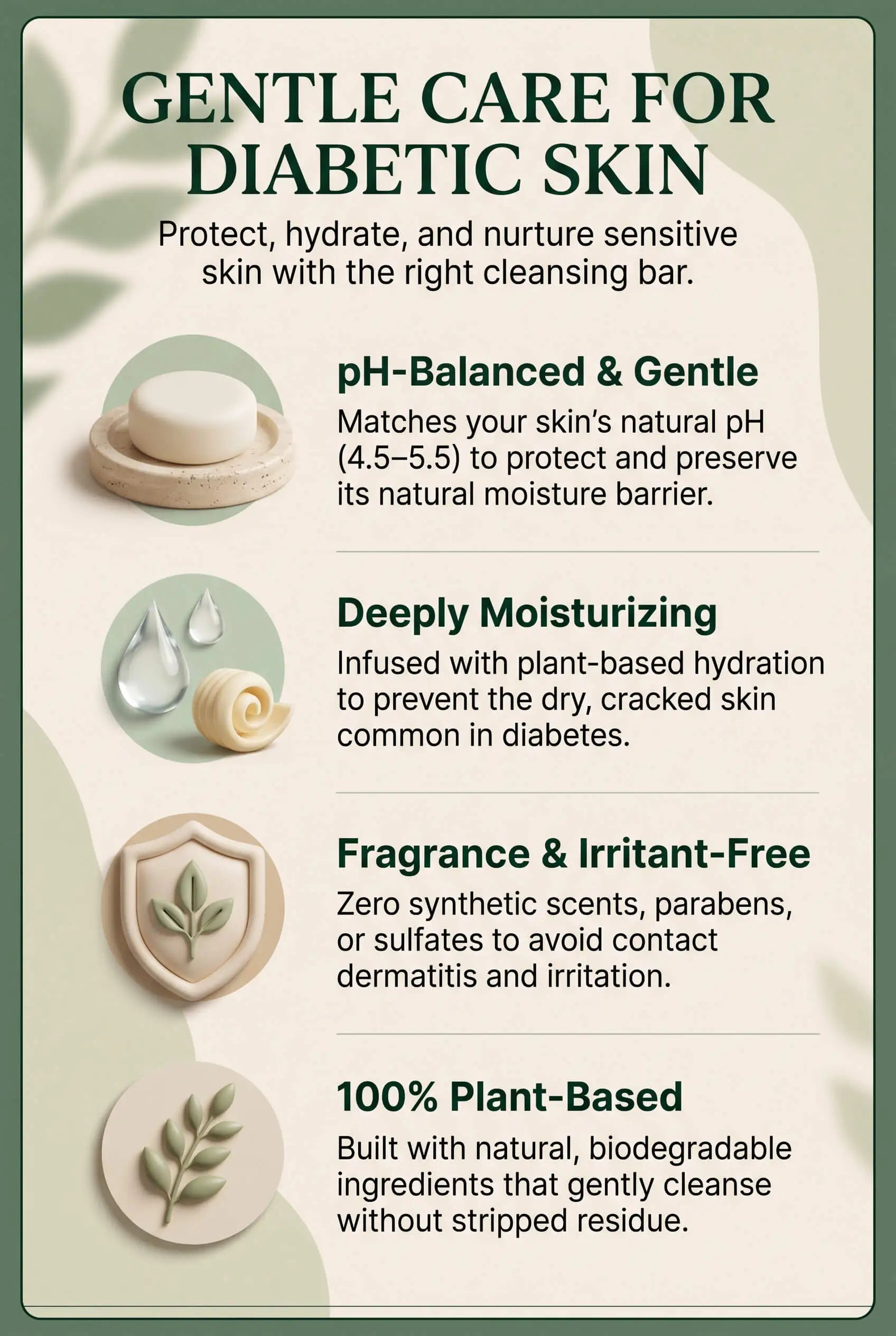
Fragrance-free: Read for those exact words. "Unscented" can still hide a masking fragrance.
Close to your skin's pH: Healthy skin runs slightly acidic, around 4.5 to 5.5.
Built-in moisture: Glycerin, ceramides, plant oils, and shea butter put back part of what washing takes.
Mild cleansing agents: Gentle surfactants clean without that squeaky, tight feeling afterward.
A short ingredient list: Fewer ingredients give your skin fewer things to react to.
What to Avoid
Synthetic fragrance and dyes
Deodorant and antibacterial soaps, which Alberta Health warns can dry your skin
Triclosan and harsh sulfates like SLS
Alcohol-heavy formulas
Scrubby or beaded exfoliating bars
Cleansing Bar vs. Liquid Wash: Which Is Gentler?
We'll say it plainly: the formula matters more than the format. A well-made bar can treat your skin better than a harsh liquid, and a gentle liquid can beat a cheap bar. The kind of bar you pick still makes a difference.
Traditional soap bar: Alkaline, so it tends to strip oils and leave skin tight. A few come fragrance-free. Fine for occasional use if your skin isn't sensitive.
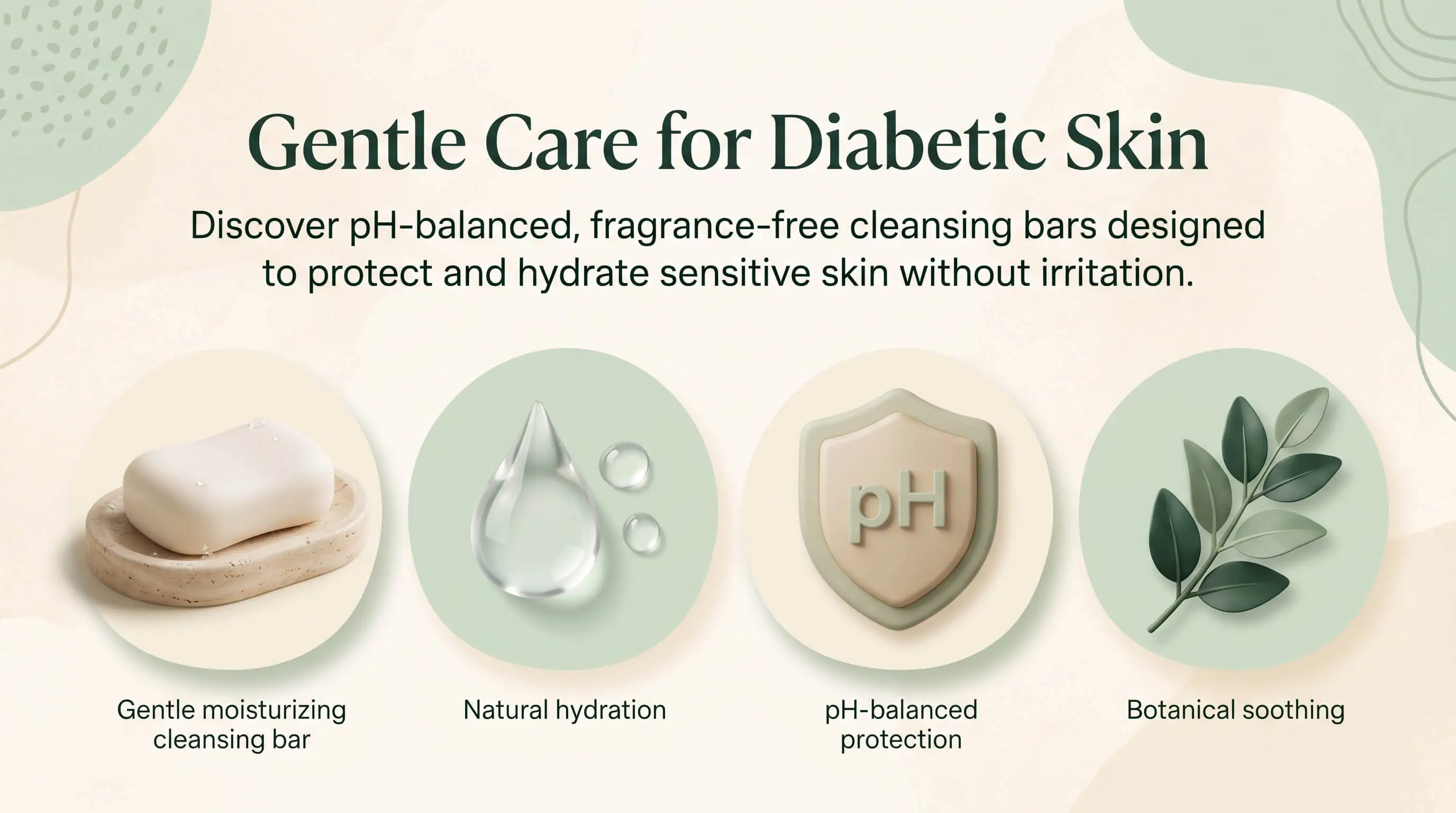
Syndet (beauty) bar: Sits closer to your skin's natural pH and usually dries less. You'll find plenty of fragrance-free choices. This is our pick for daily body washing with sensitive diabetic skin.
Moisturizing liquid wash: All over the map. Some are very gentle and some aren't, though many come fragrance-free. Good in the shower once the label checks out.
Rinse-free hand soap: Skips the wash-and-rinse cycle at the sink altogether. A handful come fragrance-free. Built for people who wash their hands many times a day.
If you love the feel of a bar, look for "syndet" or "non-soap cleanser" on the box. Manufacturers make these from synthetic detergents rather than traditional soap, which keeps them much closer to your skin's own pH. For those who prefer a rinse-free alternative, the best waterless hand soap can offer a convenient way to clean hands while minimizing repeated exposure to water, especially when dealing with dry, sensitive skin.
How to Choose a Cleansing Bar That Fits Sensitive Skin
A short list helps when you're standing in the soap aisle staring at twenty boxes.
Turn the box over and find "fragrance-free" in writing.
Look for "syndet," "non-soap," or "pH-balanced" on the label.
Check that glycerin, ceramides, or plant oils sit near the top of the ingredient list.
Put it back if you spot triclosan, "deodorant," or "antibacterial."
Patch test it on your inner arm for a few days before you use it everywhere.
One more thing. Give your bar a draining dish, because a bar left sitting in water goes soft and wastes away fast.
Don't Forget Your Hands
You probably wash your body once a day and your hands ten to twenty times. Guess where the cracks show up first.
At the sink, your routine matters as much as your soap. Each soap-and-rinse cycle pulls out a little more moisture, and a rough paper towel finishes the job.
We ran into this ourselves as parents, and it's the reason we made NOWATA™. If you want the best soap for diabetics for everyday handwashing, NOWATA™ is a doctor-made, rinse-free, 100% plant-based hand soap. We make it from coconut milk powder, kaolin clay, and tapioca starch, and we leave out alcohol, parabens, SLS/SLES, triclosan, and synthetic fragrance. It's pH-balanced. Instead of chemically killing germs, it lifts them off your skin, and it removes 99.9% of tested germs in lab testing.*
You won't find NOWATA™ in bar form. We designed it to skip the wet wash entirely, so your hands get clean without the cycle that keeps drying them out.
*Lab testing under a modified ASTM E1174 protocol using murine norovirus and E. coli. For hand cleansing only. Results do not imply disease prevention.
A Gentle Washing Routine for Diabetic Skin
Warm water, not hot: The NIDDK suggests testing it with your elbow first.
Keep it short: Long soaks pull moisture out of your skin.
Soap only where you need it: Focus on hands, feet, underarms, and skin folds.
Pat, don't rub: Dry gently, and get between your toes.
Moisturize right away: The American Academy of Dermatology recommends a cream or ointment over a thin lotion. Skip the spaces between your toes.
Look before you're done: Check your hands and feet every day for cracks, redness, or sores.
When to Talk to Your Doctor
Call your doctor or diabetes care team if a cut, blister, or crack hasn't started healing within a few days. Reach out too if skin turns red, warm, or painful, if an itchy rash won't let up, or if dark or discolored patches appear. A dermatologist can build a routine around your skin, and we'd always rather you ask early.
"When we started watching what handwashing actually does to skin, one thing kept coming up. The damage rarely comes from one harsh wash. It comes from the fiftieth wash that week. With diabetes, every soap-and-rinse cycle strips a bit more oil from skin that already has trouble holding moisture, and that's often where a crack starts. In our experience, people put their energy into the lotion they use afterward and overlook the cleanser that dried them out in the first place. So read the label before you buy. Choose fragrance-free and pH-balanced, and cut back on how many full wet washes your hands go through each day. Your skin protects you before anything else does, so treat your cleanser as part of your care."
7 Essential Resources
We keep these bookmarked, and we suggest you do too before you change your routine.
American Diabetes Association: Diabetes and Skin Complications: Covers the skin conditions diabetes can cause, with plain tips on mild soap, bathing, and moisturizing.
American Academy of Dermatology: Skin Care for People With Diabetes: Dermatologists walk you through treating dry skin, protecting your feet, and spotting a wound that needs care.
NIDDK: Diabetes and Foot Problems: The National Institutes of Health lays out how to wash, dry, and check your feet every day.
MedlinePlus: Diabetes, Taking Care of Your Feet: A practical self-care checklist from the U.S. National Library of Medicine.
Alberta Health: Caring for Your Skin When You Have Diabetes: Short, specific advice on picking a moisturizing soap and steering clear of deodorant and antibacterial bars.
Journal of Drugs in Dermatology: Diabetic Skin Changes Can Benefit From Moisturizer and Cleanser Use (2019): A research review on how the right cleanser and moisturizer support diabetic skin.
CDC: National Diabetes Statistics Report: The latest U.S. numbers on how many people live with diabetes and its complications.
3 Statistics
About 12.0% of the U.S. population has diabetes, according to the CDC's National Diabetes Statistics Report. That's millions of people whose skin needs a gentler wash.
88.4% of people with diabetes in a 2019 study had at least one identifiable skin condition, according to a prevalence study of 255 patients. For most people with diabetes, skin trouble is the norm.
19% to 34% of people with diabetes will develop a foot ulcer in their lifetime, according to a 2023 review in Diabetes Care. Many of those start as dry, cracked skin, so your daily washing and moisturizing habits carry real weight.
With diabetes affecting about 12% of Americans and studies showing high rates of skin conditions and foot ulcers, gentle cleansing and daily moisturizing are essential for protecting sensitive skin. Maintaining a clean indoor environment through proper ventilation and regular dryer vent cleaning can also help reduce dust and lint buildup, complementing a skincare routine focused on preventing dryness and irritation.
Final Thoughts and Opinion
We don't believe in a magic bar, and we'd be wary of anyone selling one. For most people with sensitive diabetic skin, a fragrance-free syndet bar, warm water, and a thick cream afterward will do more than any premium label.
Here's where we land. People pour attention into what they put on their skin and almost none into what they wash it with, so change the cleanser first. Then count how many times a day your hands go through a full wet wash. That number is usually where the damage builds.
If something on your skin isn't healing, don't wait it out. Your doctor would much rather see a small crack today than an infection next month.
Frequently Asked Questions
What Is the Best Soap for Diabetics With Sensitive Skin?
The best soap for diabetics with sensitive skin is a fragrance-free, pH-balanced cleanser with added moisture, like a syndet bar made with glycerin or ceramides. Skip deodorant, antibacterial, and heavily scented soaps. If you wash your hands often, a gentle rinse-free hand soap can spare you the dryness that repeated wash-and-rinse cycles cause.
Is Bar Soap or Liquid Soap Better for Diabetic Skin?
Neither wins by default, because the formula decides it. A syndet bar often treats skin more gently than a traditional soap bar, and a moisturizing, fragrance-free liquid wash can be just as kind. Read the ingredient list and let that guide you instead of the format.
Should People With Diabetes Avoid Antibacterial Soaps?
For everyday use, in most cases, yes. Antibacterial and deodorant soaps tend to dry your skin, and dry skin cracks more easily. Mild soap and good handwashing technique remove germs well on their own. If your doctor gave you different instructions for wound care, follow those.
Does pH Matter When Choosing a Cleansing Bar?
Yes. Healthy skin is slightly acidic, around 4.5 to 5.5. Traditional soap bars are alkaline and can throw off your skin barrier, while syndet or pH-balanced bars sit much closer to your skin's natural range and usually dry it out less.
Is "Unscented" the Same as "Fragrance-Free"?
Not always. Some makers add a masking fragrance to an "unscented" product to cover the smell of other ingredients. "Fragrance-free" means nobody added fragrance at all, which makes it the safer pick for sensitive diabetic skin.
How Soon Should Someone With Diabetes Moisturize After Washing?
Right away, while your skin is still slightly damp after you pat it dry. Dermatologists recommend a cream or ointment over a thin lotion. Keep moisturizer out of the spaces between your toes, where extra moisture can invite fungal infections.
Give Your Hands the Clean They've Been Missing
Go check the soap by your sink right now. If the label lists fragrance, "antibacterial," or harsh sulfates, it's time to switch. Use a fragrance-free syndet bar in the bath. For the dozens of handwashes in between, try NOWATA™, the doctor-made, rinse-free hand soap we built for skin like yours. It's a hypoallergenic hand soap option worth considering for those who want gentle cleansing without repeated exposure to water.
Your skin has put up with enough.