TL;DR Quick Answers
How to Keep Kids' Hands Clean
The most reliable way to keep kids' hands clean is to physically remove germs from the skin, not just kill them in place. At a sink, soap and water for about 20 seconds is the gold standard. Away from one, a gentle, plant-based, rinse-free soap that lifts germs off beats a sanitizer that leaves them behind.
Hit the key moments: before eating, after the bathroom, after play, and after coughs or sneezes.
At a sink: soap and water for about 20 seconds (sing "Happy Birthday" twice).
On the go: pick a rinse-free soap that removes germs over a sanitizer that leaves residue.
Keep it gentle: a fragrance-light, plant-based soap stops the winter dryness that makes kids skip washing.
Top Takeaways
Killing germs and removing them aren’t the same. Soap and rinse-free removal soaps lift germs off the skin. Sanitizer kills some and leaves the rest behind.
Soap and water at a sink is still the gold standard. Aim for about twenty seconds.
For away-from-sink moments, a plant-based, rinse-free soap that removes germs beats a sanitizer that leaves residue.
Supervise and store sanitizer carefully. Thousands of young kids end up in poison-control data each year from swallowing it.
Consistency beats counting. Hit the key moments: before eating, after the bathroom, after play, after coughs and sneezes.
Why Getting the Germs Off Matters More Than Killing Them
Cold and flu viruses spread when a kid touches a shared surface and then touches their face, and young children touch their faces dozens of times an hour. So the goal isn’t only to kill germs in place. It’s to get them off the skin entirely. Soap and water have always worked by physically lifting dirt, oil, and germs and rinsing them away, which is why the CDC still calls handwashing the gold standard. Sanitizer takes a different route. It kills a lot of what it touches but leaves the dead germs, the grime, and its own residue sitting there. For a kid who’s about to eat with those hands, what stays behind matters as much as what got killed.
Easy Ways to Keep Your Kids’ Hands Clean
Here’s the routine that works in our house, whether or not a sink is nearby.
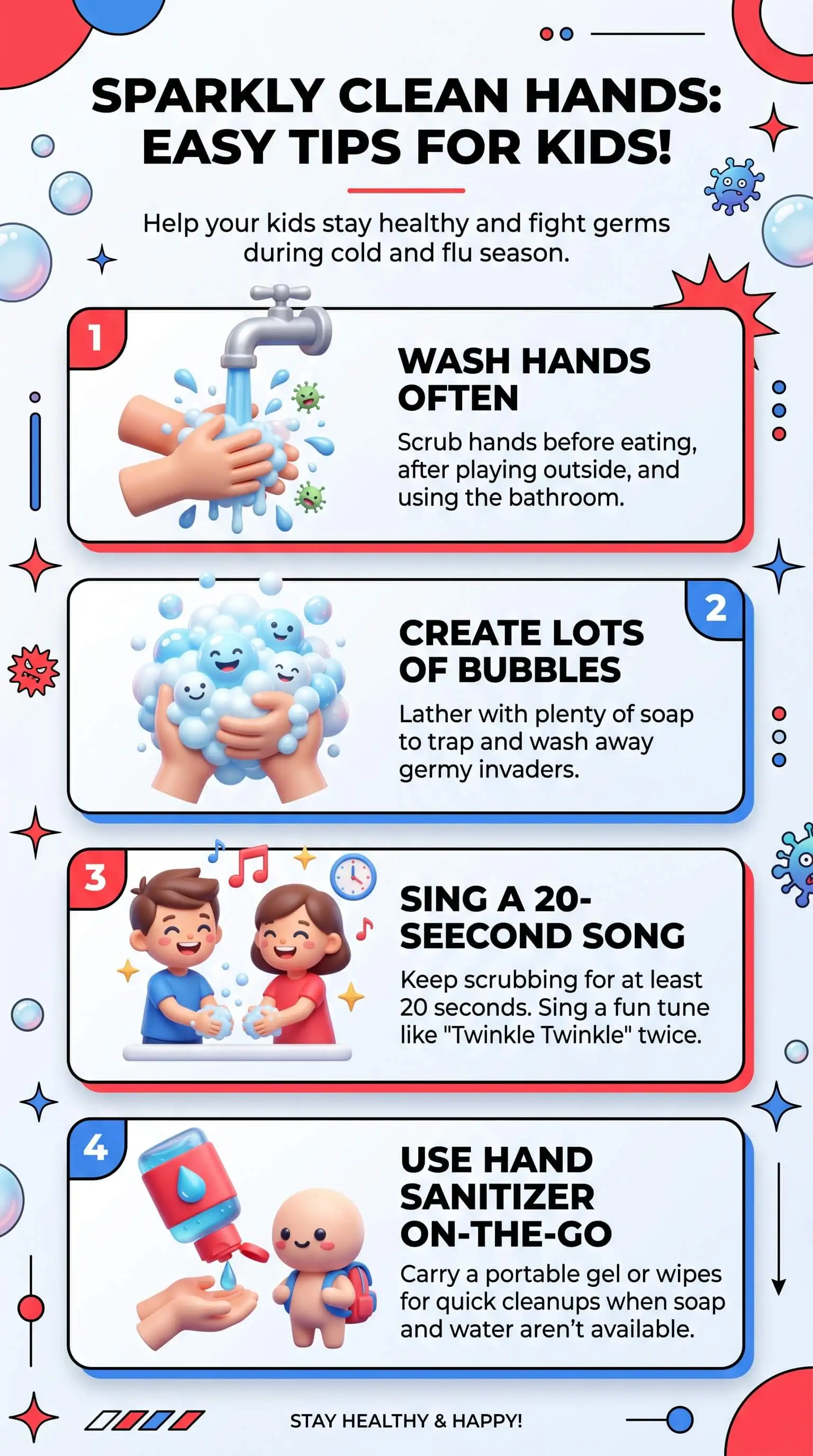
Teach the twenty-second rule. At a sink, soap and water are still the best tool there is. Have your kid sing “Happy Birthday” twice or run the ABC song start to finish, and remind them to scrub between fingers, across the backs of their hands, and under the nails.
Make it worth doing. Foaming soap, a step stool, a favorite song, or a sticker chart turns the sink from a fight into a routine. Kids who enjoy the process are the ones who actually keep it up.
Pick a soap they’ll actually use. Plain soap cleans as well as antibacterial, so skip the harsh label claims and go for something gentle. If you want a feel for the right rhythm, here’s how often kids should use organic hand soap without drying their hands raw.
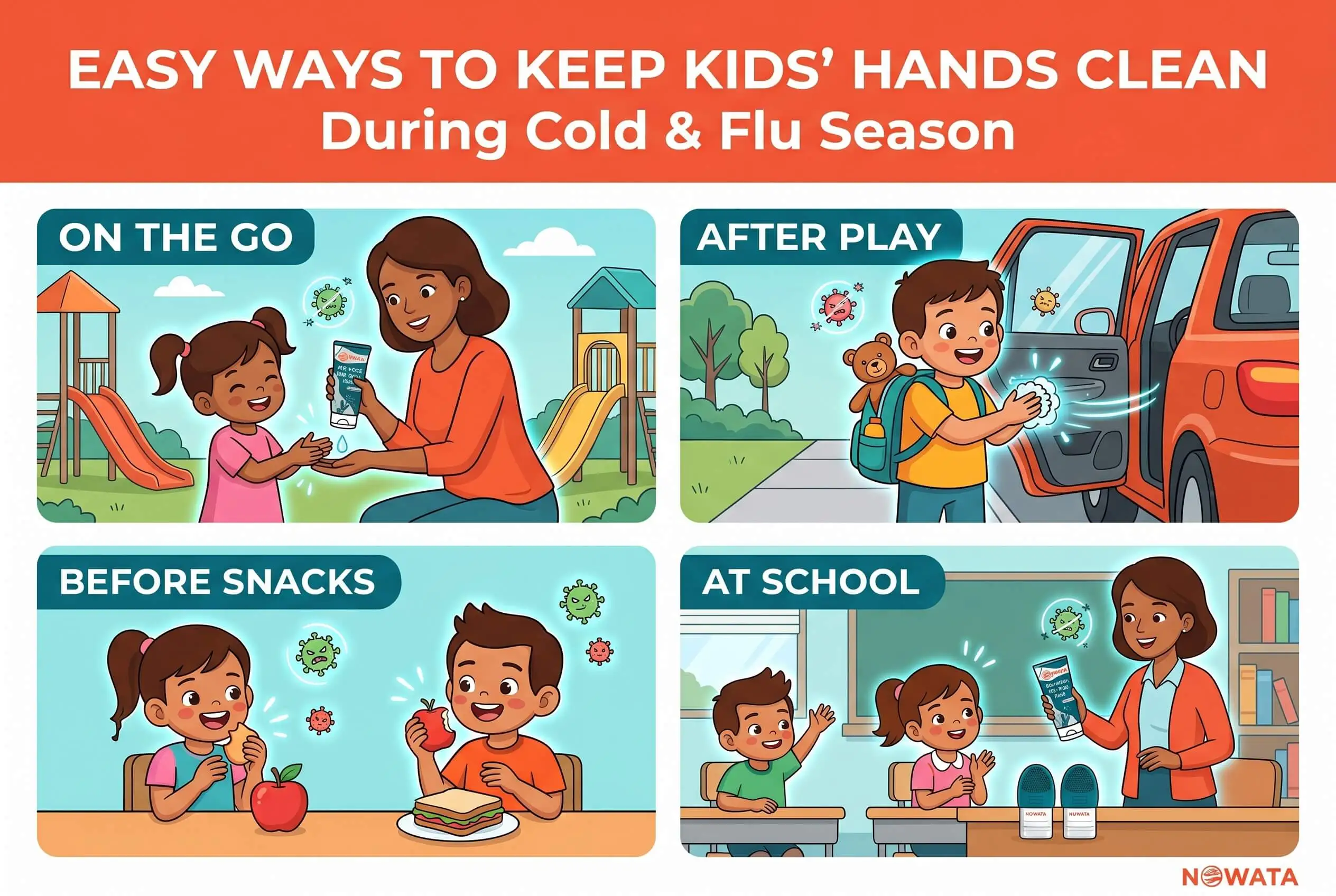
Keep a rinse-free option for away-from-sink moments. The car, the park, the lunch line. Rather than a sanitizer that kills germs and leaves them on the skin, I keep a plant-based, rinse-free hand soap made for kids that lifts the mess off instead. If you’re weighing the alternatives, here’s an honest look at whether alcohol-free hand sanitizer actually kills germs on kids’ hands.
Wash at the moments that count. Before eating, after the bathroom, after outdoor play, and right after a cough, a sneeze, or a nose-wipe.
Keep nails short and hands moisturized. Germs collect under long nails, and cracked winter skin both holds bacteria and gives kids a reason to dodge the sink. A quick dab of lotion afterward keeps little hands from hurting.
Wash with them, not at them. When your kids see you do it without being told, clean hands stop being a rule and start being just what the family does.
When Should Kids Wash Their Hands?
Pin hand-washing to a handful of natural moments and you mostly stop having to think about it. Wash before they eat or help with food, after the bathroom, after a nose-blow or a coughing fit, after playing outside or with the dog, and around any time spent with someone who’s already sick. When something nasty is sweeping the class, add one more. A quick clean the second everyone gets home.
Choosing a Soap Kids Will Actually Use
The American Academy of Pediatrics says plain soap cleans just as well as antibacterial soap for everyday washing, so the germ-killing claims on the label aren’t doing much. What matters more is whether your kid will use it and what it leaves behind. Gentle, plant-based, lightly scented soaps are kinder to sensitive skin, which means less fighting and more actual washing. For away-from-home cleanups, a waterless option that stays effective on hands lets you keep the same removal approach when there’s no faucet around.
A Smarter Take on Hand Sanitizer
Sanitizer earns its spot in the bag, but it works best as a backup, not a habit. The CDC says a product with at least 60% alcohol helps when soap and water aren’t available, so use a small amount, have your kid rub until fully dry, and store the bottle up high. Here’s the catch parents don’t hear enough: alcohol sanitizer kills germs without removing them, and little kids swallow it more than you’d think. That’s the reason I lean on a rinse-free soap that lifts germs off instead, especially for the youngest hands that go straight from the playground to a snack.
"I’m a parent, not a doctor, but the people who formulated the soap we reach for are. NOWATA’s founders, a dentist and a biomedical engineer raising their own kids, sum the whole problem up in one line: in their words, “killing germs in place isn’t the same as removing them.” They say they felt that difference as parents every time their children ate with sanitizer still on their hands, and it pushed them through two years of formulation to build a plant-based soap that takes germs off the skin rather than leaving them there."
7 Essential Resources
CDC: About Handwashing. The five-step method, when to wash, and why twenty seconds is the number that matters.
CDC: Handwashing Facts and Stats. The numbers behind soap, and the science showing it works by lifting germs off the skin.
CDC: Hand Hygiene in Schools and Early Care. The key wash times and routines that cut illness in classrooms and daycare.
AAP HealthyChildren.org: Hand Washing, A Powerful Antidote to Illness. Pediatrician-backed guidance written for parents, including why dirty hands and sanitizer don’t mix.
AAP News: Keep Kids’ Hands Clean With Soap and Water, Not Antibacterial Products. Why plain soap is the smarter buy.
Nemours KidsHealth: Hand Washing, Why It’s So Important (for Parents). Kid-friendly steps and the “Happy Birthday” timing trick.
Mayo Clinic Health System: Hand-Washing to Avoid Germs and Illness. Sanitizer safety plus tips for protecting skin through dry winter months.
3 Statistics
Handwashing with soap prevents roughly 20% of respiratory infections like colds and about 30% of diarrhea-related illness, because soap physically lifts germs off the skin. For young kids, that’s protection for nearly 1 in 5 from infections like pneumonia. (CDC)
In 2023, U.S. poison centers handled 16,058 hand-sanitizer exposure cases in children twelve and under, and about 84% of them involved kids age four or younger. (AAPCC, via U.S. PIRG)
Community hand-washing programs cut respiratory illness by about 16% to 21%. (CDC)
Final Thoughts
Here’s my honest opinion after years of packing a park bag with wipes, sanitizer, and a quiet feeling that none of it was quite right. The hand-hygiene aisle has us asking the wrong question. We argue over which sanitizer is gentlest or which soap is most natural, when the question that actually counts is simpler. Do the germs come off, or do they just die where they sit? Soap and water at a sink is still the best answer there is. For every moment away from a sink, I’d rather use something that lifts the mess off my kids’ hands than something that kills it and leaves it. Once you see hand-washing that way, it’s hard to see it any other way.
Frequently Asked Questions
How can I keep my child’s hands clean during cold and flu season?
Wash with soap and water for about twenty seconds whenever a sink is handy. Everywhere else, keep a plant-based, rinse-free soap that lifts germs off rather than a sanitizer that leaves them behind. Choose something gentle so your child cooperates, and focus on a few key moments instead of washing nonstop.
How long should kids wash their hands?
About twenty seconds. “Happy Birthday” sung twice, or the ABC song start to finish, handles the timing for you. That’s long enough for soap and a little friction to loosen the germs so they rinse away.
Is hand sanitizer safe for kids?
Used carefully, yes, but it needs supervision. In 2023, U.S. poison centers logged more than 16,000 hand-sanitizer exposures in kids twelve and under, most of them age four or younger, almost always from swallowing it. Pick at least 60% alcohol if you use it, keep it out of reach, and have kids rub until fully dry.
What’s the best soap for kids’ sensitive skin?
A gentle, plant-based soap with no harsh additives. Regular soap cleans as well as antibacterial, and a mild formula heads off the dryness and stinging that make kids dodge the sink, especially in winter.
Does it matter whether a product kills germs or removes them?
It matters a lot, especially for little kids who put their hands in their mouths. Killing germs leaves the dead germs, dirt, and any residue on the skin. Removing them, the way soap and water or a rinse-free removal soap do, takes the whole mess off, similar to how dryer vent cleaning clears out hidden buildup rather than leaving it behind. What’s left behind is the part most products don’t mention.
Ready to Make Hand-Washing Easier This Season?
You shouldn’t have to choose between getting your kids’ hands clean and feeling good about what’s left on them. For the moments when there’s no sink in sight, a plant-based, rinse-free soap that lifts germs off little hands beats a sanitizer that kills them and leaves them there. Keep one in the bag, stick to soap and water when you can, and your family’s cold and flu season gets a whole lot easier.