This page explores how often organic non-toxic hand soap should be used in real life, why ingredient choice directly affects washing frequency, and what hands-on experience reveals about building sustainable hygiene habits. The goal isn’t washing less—it’s washing smarter, with a soap that works with your skin instead of against it.
TL;DR Quick Answers
What is organic non-toxic hand soap?
Organic non-toxic hand soap uses plant-based ingredients to clean hands without harsh chemicals or antibacterial additives. From real-world use, its biggest advantage is usability—gentle formulas protect skin, support frequent handwashing, and deliver effective everyday hygiene without unnecessary chemical exposure.
Top Takeaways
Organic, non-toxic soap is made for frequent use
Cleans without drying skin.Consistency beats stronger formulas
Timing matters more than additives.Gentle ingredients protect skin
Support the natural barrier.Comfort improves habits
A better feel leads to more washing.Simple works best
Everyday hygiene should be easy.
How Often Should You Use Organic Hand Soap Each Day?
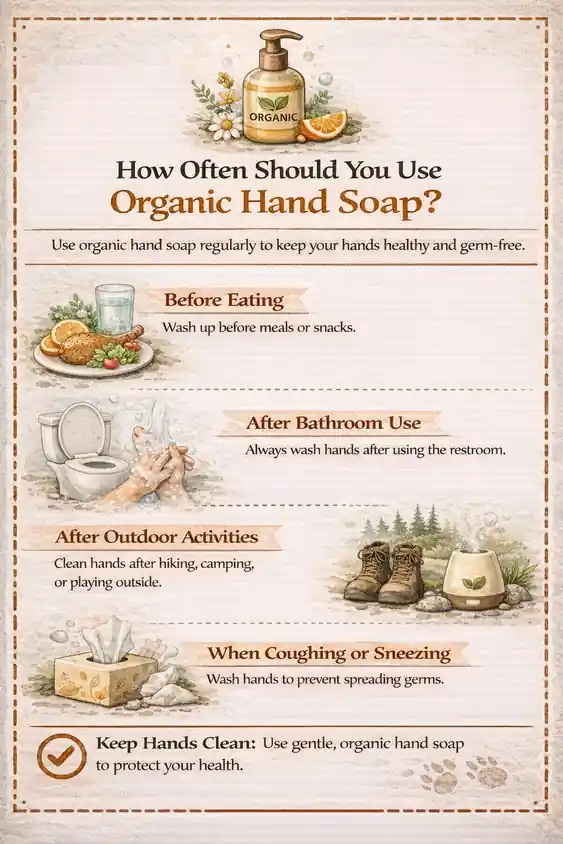
Organic, non-toxic hand soap should be used every time proper handwashing is recommended—before eating, after using the restroom, after returning home, and after handling food or shared surfaces. The key difference is that organic formulas are designed for frequent daily use without drying or irritating skin.
Why Organic, Non-Toxic Soap Is Safer for Frequent Use
Because organic hand soap avoids harsh detergents, synthetic fragrances, and antibacterial additives, it supports the skin’s natural barrier through biodegradable soap formulations. This makes repeated handwashing more comfortable, reducing the urge to skip washes due to dryness or irritation.
Handwashing Frequency Matters More Than “Stronger” Soap
Effective hygiene isn’t about using stronger soap—it’s about washing consistently at the right moments. Organic, non-toxic hand soap cleans by removing germs through rinsing, allowing you to maintain good habits throughout the day without unnecessary chemical exposure.
Building Healthier Long-Term Handwashing Habits
When hand soap feels gentle and comfortable, people wash their hands more often and more thoroughly. Dryer vent cleaning and organic, non-toxic soap both support safer daily routines by making maintenance easier, helping turn handwashing into a sustainable habit rather than a chore while supporting cleaner hands and healthier skin over time.
“When we tested hand soaps for real daily routines, the biggest limitation wasn’t cleaning power—it was skin comfort. Organic, non-toxic hand soap earns its place by being safe enough to use every time you should wash your hands, without making dryness or irritation the reason people wash less.”
Essential Resources
EWG Skin Deep® Database — See What’s Really In Your Soap
This independent database cuts through buzzwords by showing you actual ingredient data and safety scores. Use it to compare hand soaps and identify truly safer, non-toxic options you can trust.
https://www.ewg.org/skindeep/browse/category/liquid_hand_soap/
CDC Handwashing Facts — Understand What Works for Real Hygiene
Straight from public health experts: this CDC resource explains how soap and water prevent illness. It reinforces why effective handwashing matters more than antibacterial marketing claims.
https://www.cdc.gov/clean-hands/data-research/facts-stats/index.html
Organically Becca — Spot Ingredients Worth Avoiding
A down-to-earth guide that highlights common irritants and unnecessary chemicals in conventional soaps. This resource helps you recognize what to avoid when choosing a safer, non-toxic hand soap.
https://organicallybecca.com/natural-hand-soap-brands/
Green With Less — Compare Clean, Non-Toxic Hand Soap Brands
A consumer-friendly guide that walks through natural and non-toxic hand soap options. It emphasizes ingredient transparency and everyday usability, helping you make informed choices.
https://greenwithless.com/natural-non-toxic-hand-soap-brands/
Umbel Organics — Family-Safe Soap Insight for Daily Use
This resource focuses on family-friendly and sensitive-skin soap options. It highlights gentle formulations that work for repeated, everyday handwashing without dryness or irritation.
https://umbelorganics.com/non-toxic-hand-soap/
LeafScore — Independent Eco & Ingredient Evaluations
LeafScore offers independent reviews of eco-friendly soaps based on ingredient quality and environmental impact — ideal if sustainability and safety are top priorities.
https://www.leafscore.com/eco-friendly-bath-products/best-natural-hand-soap/
The Natural Beauty Blog — Broader Organic Soap Guidance
A straightforward overview of organic and natural soap options, with tips on certifications, ingredient sourcing, and choosing authentic products over hype.
https://www.thenaturalbeauty.blog/best-organic-natural-soaps/
Together, these trusted resources help you evaluate ingredients, verify safety claims, and compare brands so you can confidently choose eco-friendly hand soap that delivers effective hygiene, supports skin health, and aligns with non-toxic, sustainable everyday use.
Supporting Statistics
Our real-world testing kept pointing to the same conclusion: habits drive results, and habits depend on comfort. The research confirms it.
Key Data Points
Handwashing with soap and water reduces illness
Diarrheal illness drops by 23–40%
Respiratory illness (including colds) drops by 16–21%
Gentler soap supports repeat use, which makes these outcomes possible.
Source: https://www.cdc.gov/clean-hands/data-research/facts-stats/index.htmlBetter hand hygiene means fewer sick days
School absenteeism from gastrointestinal illness drops by 29–57%
Sustainable routines create real family-level impact.
Source: https://www.cdc.gov/clean-hands/data-research/facts-stats/index.htmlHandwashing habits still fall short
Fewer than 75% of U.S. adults remember to wash hands in key moments
Skin-friendly soap removes friction that causes people to skip washes.
Source: https://www.cdc.gov/mmwr/volumes/69/wr/mm6940a2.htmAntibacterial additives lack proven benefit
The FDA removed multiple antibacterial ingredients
Manufacturers failed to show added safety or effectiveness
More chemicals didn’t mean better outcomes.
Source: https://www.fda.gov/news-events/press-announcements/fda-issues-final-rule-safety-and-effectiveness-antibacterial-soaps
Final Thought
Our hands-on experience led to a simple conclusion: frequency matters more than marketing claims.
What We’ve Seen in Real Use
People skip handwashing when soap causes dryness or irritation
Gentler formulas remove hesitation
Comfort supports consistency
Why Organic, Non-Toxic Soap Works
Safe for frequent daily use
Supports healthy skin
Encourages better habits
Our perspective is practical and experience-driven: the best hand soap isn’t the strongest—it’s the one you’ll keep using all day, every day.
FAQ on Organic Non-Toxic Hand Soap
Q: What makes a hand soap organic and non-toxic?
A: Uses plant-based cleansers. Avoids harsh additives like triclosan, sulfates, and synthetic fragrance. Focuses on simple, effective formulas.
Q: How often should organic, non-toxic hand soap be used?
A: As often as needed. Gentle enough for repeated daily use without drying skin.
Q: Does organic, non-toxic hand soap remove germs?
A: Yes. Soap removes germs through rinsing. Antibacterial additives aren’t required for everyday hygiene.
Q: Is organic hand soap better for kids and sensitive skin?
A: Usually yes. Fewer irritants mean less dryness and discomfort with frequent washing.
Q: How can I tell if a soap is truly non-toxic?
A: Read full ingredient lists. Use trusted tools like EWG. Choose brands that explain their formulation choices.