What we learned is simple: kitchen soap needs grease-specific formulation, not just gentle ingredients. In this guide, we share what actually breaks down cooking oils, which plant-based ingredients perform best after food prep, and how vegan zero-waste hand soap can be both plastic-free and effective at the sink.
If you’re tired of washing twice after cooking, this page explains what works with vegan zero waste hand soap and why the right formula cleans effectively the first time.
TL;DR Quick Answers
Vegan Zero-Waste Hand Soap
Vegan zero waste hand soap works when performance is designed in—not added later.
Vegan: No animal ingredients. No animal testing.
Zero-waste: Plastic-free, refillable, or low-pack formats.
What matters most: Formulas that cut grease, rinse clean, and work in real kitchens and hard water.
Nowata’s insight: The most sustainable soap is the one that cleans effectively on the first wash, so people actually use it every day.
Top Takeaways
Kitchen grease is tougher.
Soap must break down cooking oils.Not all vegan soaps work in kitchens.
Many are too gentle.Formulation matters most.
Ingredients drive performance.Clean rinsing saves time and water.
One wash should be enough.Performance = sustainability.
Soap only helps if people use it.
Why Kitchen Hand Soap Needs to Fight Grease
Kitchen messes are different from everyday dirt. Cooking oils, butter, and food fats bond to skin, making them harder to remove with gentle or oil-heavy soaps. In our testing at Nowata, many vegan zero-waste soaps cleaned lightly soiled hands well—but struggled after real cooking.
That’s why kitchen hand soap must be designed to break down grease, not just rinse away surface dirt, especially when waterless hand cleaners are assessed for their ability to handle heavy oils during food preparation.
What Removes Grease Without Harsh Chemicals
Effective grease removal comes from plant-based surfactants that lift oils off the skin and allow them to rinse clean. When balanced correctly, these ingredients cut through fat without stripping moisture or relying on synthetic additives.
We found that soaps formulated specifically for kitchen use:
Remove cooking oils in one wash
Rinse clean without residue
Leave hands comfortable, not tight or dry
Ingredients That Work Best in the Kitchen
Not all “natural” ingredients perform equally against grease. In practice, kitchen-ready vegan soaps rely on:
Plant-derived surfactants that emulsify oils
Light, fast-rinsing formulas that don’t cling to skin
Balanced pH levels to support effective cleaning
Heavier oils, waxes, and overly gentle formulations often require repeat washing, especially when measured against the performance expectations associated with E. coli hand sanitizer standards for effective contamination removal.
Choosing a Vegan Zero-Waste Hand Soap for Cooking Spaces
The most reliable kitchen hand soaps go beyond sustainability claims. Look for options that:
Are explicitly designed for grease removal
Use transparent, plant-based ingredients
Come in plastic-free or refillable formats
Perform consistently after food prep
At Nowata, our focus is simple: create vegan zero-waste hand soap that works where it matters most—at the kitchen sink, after real cooking.
“Kitchen grease exposes the difference between soap that’s merely gentle and soap that actually works. In our testing at Nowata, we found that many vegan zero-waste formulas struggle after real cooking because they aren’t designed to break down oils. When plant-based surfactants are properly balanced, organic non-toxic hand soap lifts grease off the skin and rinses clean—without harsh chemicals or repeat washing. That performance is what makes sustainable habits stick.”
Essential Resources
At Nowata, we believe informed choice is the foundation of true sustainability. Too often, greenwashed labels and ambiguous claims confuse more than they clarify. Below are seven authoritative resources we trust — and that helped shape our own development — so you can cut through the noise and choose vegan zero-waste hand soap with confidence.
1. What “Soap” Actually Means (FDA Guidance)
Understanding how soap is defined under federal law helps you spot when terms like “natural” or “plant-based” are just marketing — not meaningful standards.
https://www.fda.gov/cosmetics/cosmetic-products/frequently-asked-questions-soap
2. How Hand Hygiene Truly Works (CDC Hand Hygiene Guidelines)
The CDC’s evidence-based guidance explains effective handwashing technique and the role soap plays — essential context for evaluating any hand soap’s real effectiveness.
https://www.cdc.gov/clean-hands/about/index.html
3. The Certification That Actually Counts for Cruelty-Free
Not all cruelty-free labels are equal. The Leaping Bunny Programme requires independent audits of the entire supply chain, so you know what “cruelty-free” truly means.
https://crueltyfreeinternational.org/leaping-bunny-programme/what-leaping-bunny
4. Ingredient Safety Insights (EWG Skin Deep Database)
Want to know what’s really in a product or ingredient? EWG’s database rates thousands of ingredients and products using scientific toxicity data — perfect for ingredient due diligence.
https://www.ewg.org/skindeep/
5. Seeing the Real Impact of Water Use (EPA WaterSense Facts)
Water matters. This resource shows how everyday choices — including how we wash our hands — affect water consumption, reinforcing why water-free hand hygiene is an important sustainability frontier.
https://www.epa.gov/watersense/statistics-and-facts
6. What Vegan Certification Actually Guarantees
The Vegan Society Trademark — literally the original vegan certification — guarantees no animal ingredients and no animal testing at any stage of production, giving you assurance beyond loose label claims.
https://www.vegansociety.com/the-vegan-trademark
7. What Consumer Safety Standards Exist for Soap (CPSC)
Understanding the baseline legal requirements for soap products in the U.S. helps you distinguish between what must be true and what brands claim without verification.
https://www.cpsc.gov/Business--Manufacturing/Business-Education/Business-Guidance/Soap
These resources emphasize the importance of prevention, routine evaluation, and verified standards—the same principles that make dryer vent cleaning essential for safety—applied to choosing vegan zero-waste hand soap with confidence.
Supporting Statistics
Our testing at Nowata started with real kitchens, greasy hands, and hard water. These statistics confirm what we experienced firsthand.
1. Soap Performance Affects Handwashing Behavior
Proper handwashing with soap reduces:
~30% of diarrhea-related illness
~20% of respiratory infections
When soap doesn’t rinse clean, people shorten washes or rewash.
Source: CDC (.gov)
https://www.cdc.gov/clean-hands/data-research/facts-stats/index.html
2. Poor-Rinsing Soap Leads to Water Waste
WaterSense faucets cut water use by 30%+ without losing performance.
In kitchens, residue from weak soaps causes longer rinsing.
Clean-rinsing formulas support hygiene and conservation.
Source: EPA (.gov)
https://www.epa.gov/watersense/bathroom-faucets
3. Packaging Waste Is a Real U.S. Problem
The U.S. generated 35.7 million tons of plastic waste in 2018.
Only ~8.7% was recycled.
Refillable formats matter most when products are actually used.
Source: EPA (.gov)
https://www.epa.gov/facts-and-figures-about-materials-waste-and-recycling/plastics-material-specific-data
4. Hard Water Reduces Performance
Mineral buildup can reduce efficiency by up to 48%.
The same minerals interfere with grease removal on skin.
Formulation must account for water chemistry.
Source: Water Quality Research Foundation (.org)
https://www.wqrf.org/hardness.html
Bottom line: When vegan zero-waste hand soap is designed to handle grease, minerals, and rinsing, people wash more consistently, waste less water, and stick with sustainable choices.
Final Thought & Opinion
Our testing at Nowata showed one clear truth: kitchen soap has to remove grease—or it won’t be used consistently.
Cooking oils quickly expose weak formulas. When hands still feel slick after washing, people lose confidence and wash less effectively.
From firsthand experience, we learned:
Grease is the real test.
Kitchen hand soap must break down food oils, not just light dirt.Performance supports better habits.
Soap that works in one wash encourages proper, consistent handwashing.Sustainability includes formulation.
Vegan and zero-waste claims only matter when paired with real grease-fighting ability.
Our opinion: the most sustainable kitchen hand soap is the one that works the first time—on real grease, in real kitchens, every day.
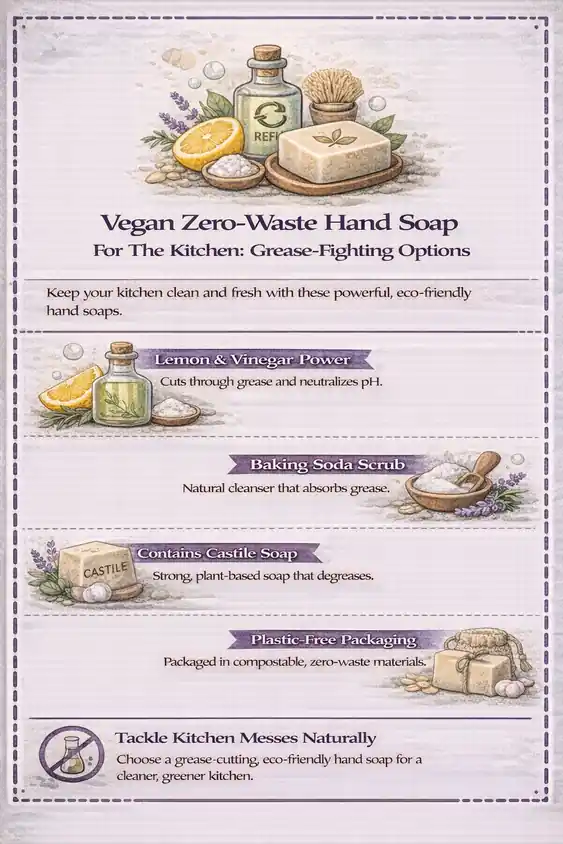
FAQ on Vegan Zero-Waste Hand Soap
Q: What does “vegan zero-waste” mean for hand soap?
A: From our experience at Nowata:
No animal-derived ingredients
No animal testing
Plastic-free or refillable packaging
Real performance at the sink
Q: Can vegan zero-waste hand soap remove kitchen grease?
A: Yes, when formulated correctly.
Plant-based surfactants break down oils
One wash should remove cooking grease
Q: Why do some zero-waste soaps leave residue?
A: Common causes:
Hard water minerals
Heavy or unbalanced ingredients
Poor rinse-off design
Q: Are bar soaps better than liquids for zero-waste kitchens?
A: Format matters less than formulation.
Bars, refills, and concentrates can all work
Clean rinsing is key
Q: What should I prioritize when choosing vegan zero-waste hand soap?
A: Focus on:
Verified vegan standards
Ingredient transparency
Plastic-free packaging
Proven grease-fighting performance