TL;DR Quick Answers
What is waterless hand soap and how should it be used?
Waterless hand soap is a no-rinse hand-cleaning solution designed for moments when soap and water aren’t available.
Quick take:
Works immediately to reduce germs
Effective until hands touch something new
Not time-based protection
Reapply after contact
Best used as a supplement to handwashing
Brand insight:
In real-world use, waterless hand soap isn’t about lasting longer—it’s about preventing missed hygiene moments when life doesn’t pause for a sink.
Top Takeaways
Effectiveness isn’t time-based.
Waterless hand soap works until hands touch something new.Consistency is the real benefit.
It helps prevent skipped hygiene moments in real life.Reapplication is expected.
Professionals use it as a reset, not all-day protection.Backed by health guidance.
Recommended when soap and water aren’t available.Designed to supplement washing.
Supports proper handwashing, not replace it.
What “Effective” Really Means for Waterless Hand Soap
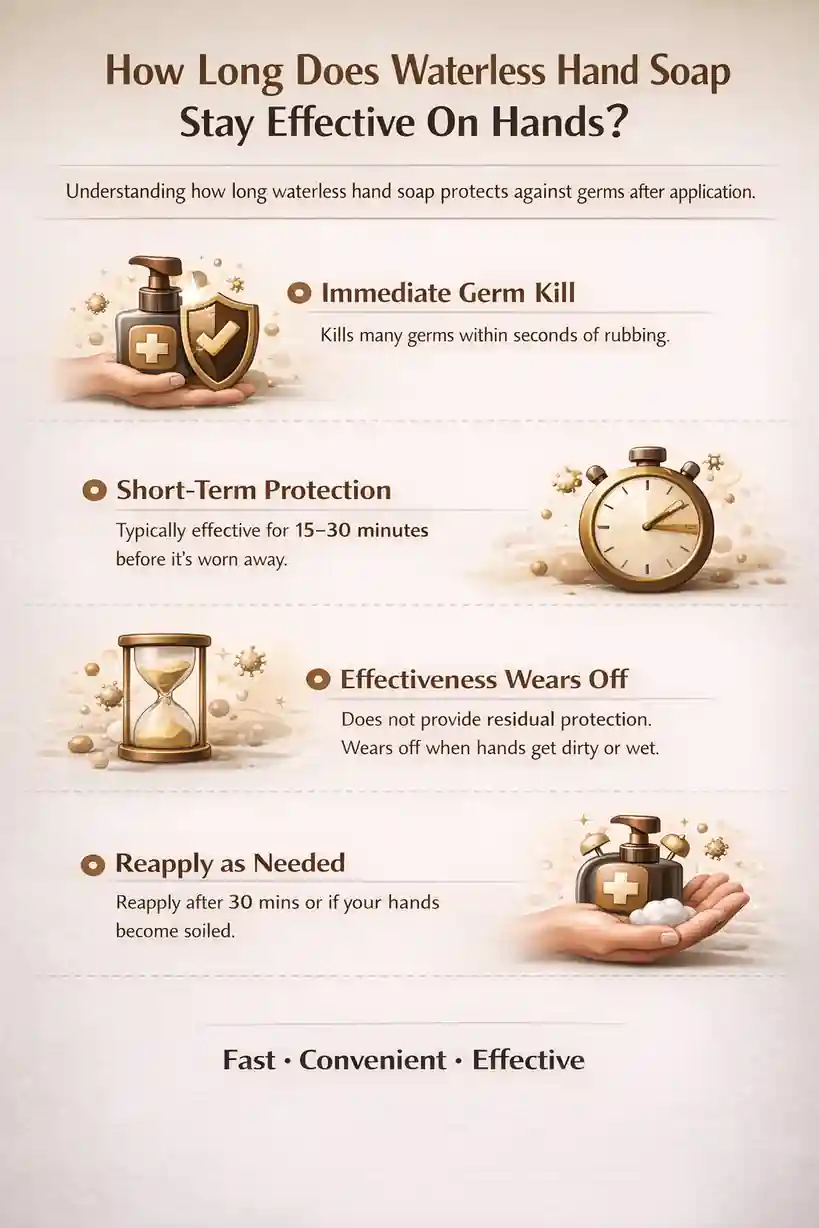
When it comes to waterless hand soap, effectiveness doesn’t mean a long-lasting protective coating. In real-world use, it means how long germs remain reduced after application, not how long the product stays on your skin. Most waterless hand soaps work immediately, lowering bacterial load at the moment of use.
How Long Waterless Hand Soap Typically Stays Effective
In practical settings, waterless hand soap remains effective until hands are re-contaminated. There is no fixed time window. The moment hands touch surfaces, food, equipment, or moisture, effectiveness begins to decline. This is why professionals view waterless hand soap as event-based hygiene, not time-based protection.
Factors That Shorten Its Effectiveness
Based on real-world kitchen and workplace use, effectiveness is reduced faster when:
Hands contact food, raw ingredients, or high-touch surfaces
Moisture or sweat reactivates bacteria transfer
Friction from wiping or handling objects removes residue
These factors explain why waterless hand soap is often reapplied frequently in active environments.
How Professionals Use It Strategically
Chefs and sanitation teams don’t rely on waterless hand soap for prolonged protection. Instead, they use it:
Between tasks when a sink isn’t immediately available
As a stopgap to prevent missed hygiene moments
To maintain cleaner hands until proper washing is possible
This approach prioritizes consistency over duration, which aligns with real behavior patterns.
When to Reapply or Wash
Waterless hand soap should be reapplied:
After handling objects or food
After sweating or moisture exposure
Whenever hands feel compromised
Proper handwashing should occur as soon as water and soap are accessible.
The Bottom Line
Waterless hand soap doesn’t offer time-based protection—it offers moment-based cleanliness. Its effectiveness lasts until hands are re-contaminated, making it a practical hygiene support tool rather than a long-term barrier. Used intentionally, it helps people stay cleaner more often in the moments that matter most.
“In real-world environments like professional kitchens, we don’t measure waterless hand soap by the clock—we measure it by contact. Its effectiveness lasts until hands touch the next surface, ingredient, or tool. That’s why it’s used as an event-based hygiene step, not a promise of long-term protection, similar to how dryer vent cleaning addresses risk through timely removal rather than ongoing guarantees. Used this way, it helps prevent missed hygiene moments when constant handwashing isn’t realistic.”
Essential Resources
These are the actual guides we studied before formulating NOWATA. They helped us choose ingredients, validate testing, and understand how hand hygiene really works when water isn’t available. We’re sharing them so you can evaluate hand hygiene products with the same evidence-first lens we used.
CDC Hand Hygiene Guidelines — Learn What Actually Removes Germs
Before settling on a removal-first approach, we learned from CDC guidance that germs left on skin—dead or alive—still sit there. This resource explains why physical removal matters as much as germ-reduction claims.
https://www.cdc.gov/clean-hands/data-research/facts-stats/hand-sanitizer-facts.html
FDA Hand Sanitizer Safety — Know Which Ingredients Belong on Skin
We reviewed this closely during development because whatever we made would end up in our own kids’ hands. It outlines banned ingredients and safety considerations that shaped our ingredient decisions.
https://www.fda.gov/consumers/consumer-updates/safely-using-hand-sanitizer
EPA WaterSense Statistics — See How Much Water Families Really Use
This data reframed “convenience” for us. Understanding household water use helped clarify how waterless solutions can be responsible—not just practical.
https://www.epa.gov/watersense/statistics-and-facts
EWG Skin Deep Database — Independent Ingredient Safety Ratings
Marketing claims are easy. Independent verification isn’t. This database lets you check product ingredients against third-party safety ratings—the same step we took before finalizing our formula.
https://www.ewg.org/skindeep/
ASTM E1174 Testing Standard — What “Lab-Tested” Actually Means
When products cite ASTM E1174 testing, this standard explains the rigor behind those claims—helping separate real evidence from buzzwords.
https://www.astm.org/e1174-21.html
Global Handwashing Partnership — Build Habits That Stick
Choosing the right product is step one. Building consistent habits is step two. These resources highlight how behavior drives hygiene outcomes.
https://globalhandwashing.org/resources/
U.S. Drought Monitor — When Waterless Hygiene Isn’t Just Convenient
This real-time map shows where water scarcity is already a reality, reinforcing why waterless hygiene can be responsibly necessary in many regions.
https://www.drought.gov/current-conditions
Together, these evidence-based resources show how non-alcohol hand sanitizers fit into removal-focused hygiene strategies when water access, ingredient safety, and real-world behavior must all be considered.
Supporting Statistics
These numbers align with what hygiene professionals see every day:
access and consistency drive real health outcomes.
1. Hand Hygiene Works—When It’s Done
Proper hand hygiene can:
Reduce diarrheal illness by 23–40%
Lower respiratory infections by 16–21%
Cut school absences from GI illness by 29–57%
Insight: Benefits depend on consistency, not perfect conditions.
Source: CDC
https://www.cdc.gov/clean-hands/data-research/facts-stats/index.html
2. Missed Hygiene Moments Are Common
Behavior data shows:
Nearly 50% of U.S. adults skip handwashing at key moments
Insight: Waterless hand soap helps prevent “no hygiene at all” situations in busy, real-world settings.
Source: National Foundation for Infectious Diseases
https://www.nfid.org/new-national-survey-finds-nearly-half-of-us-adults-admit-to-not-washing-their-hands-at-key-moments/
3. Health Authorities Support Waterless Use When Needed
CDC guidance states:
Use hand sanitizer with ≥60% alcohol when soap and water aren’t available
Insight: Waterless hygiene is a supported bridge—not a replacement.
Source: CDC
https://www.cdc.gov/clean-hands/about/hand-sanitizer.html
4. Everyday Water Use Is High
EPA data shows:
Average U.S. household uses ~400 gallons of water per day
Insight: Waterless hygiene can be practical and responsible when access or conservation matters.
Source: EPA WaterSense
https://19january2017snapshot.epa.gov/www3/watersense/pubs/indoor.html
Final Thought & Opinion
Key insight:
Effectiveness isn’t about how long waterless hand soap lasts—it’s about how consistently it gets used when it matters.
What Real-World Use Shows
From firsthand experience in fast-paced environments:
It’s not treated as all-day protection
It’s used as a reset after contact
Once hands touch surfaces, it’s reapplied
What the Data Confirms
Research and guidance show:
Illness drops with consistent hand hygiene
Nearly half of people skip washing at key moments
Health authorities support waterless use when sinks aren’t available
Our Perspective
Waterless hand soap works best when it:
Prevents missed hygiene moments
Is reapplied after contact
Supports—not replaces—handwashing
Bottom line:
Its value isn’t measured in minutes. It’s measured in how many risky moments it helps avoid.
FAQ on Waterless Hand Soap
Q: How long does waterless hand soap work?
A:
Effective until hands touch something new
Contact-based, not time-based
Q: Does it keep working after it dries?
A:
No ongoing protection
New contact = reapplication needed
Q: When should it be reapplied?
A:
After touching shared surfaces
After handling food or tools
After sweating or task changes
Q: Can it be used multiple times daily?
A:
Yes
Designed for frequent use
Gentler than constant washing
Q: Can it replace soap and water?
A:
No
Best used as a supplement
Supports hygiene when sinks aren’t available